Family-Owned vs. Corporate Funeral Homes: Why the Difference Matters More Than You Think
When you search for a funeral home in your area, the names on the buildings might look familiar. Many of them have been around for decades. But here's something most families don't realize: a growing number of those "local" funeral homes are now owned by large national corporations.
The name on the sign hasn't changed. The building looks the same. But the people making decisions about pricing, staffing, and service standards may be sitting in an office hundreds of miles away.
This matters more than most people think. And if you're choosing a funeral home in Franklin, Tennessee, or anywhere in Williamson County, it's worth understanding the difference before you make one of the most personal decisions your family will ever face.
The Quiet Wave of Corporate Acquisitions
Over the past few decades, large publicly traded companies have been buying independent funeral homes across the country. The biggest player in this space operates thousands of locations under hundreds of different local brand names.
The strategy is simple. Buy a well-known local funeral home, keep the original name, and run it under a corporate model. Most families never realize the ownership has changed.
This trend has hit Middle Tennessee directly. Several funeral homes in Williamson County that were once family-owned are now part of larger corporate networks. The transition often happens quietly, with little public announcement.
That's not to say corporate-owned funeral homes can't provide good service. Many of their employees are caring, skilled professionals. But the structure behind them is fundamentally different from what families experienced when those homes were independently run.
How Pricing Changes Under Corporate Ownership
One of the biggest differences between family-owned and corporate funeral homes is cost. Corporate providers answer to shareholders. They have quarterly earnings targets, regional management layers, and national overhead that independent providers simply don't carry.
Those costs get passed on to families.
Industry observers have noted that when a corporate chain acquires a local funeral home, prices tend to rise over time. The increase may not happen overnight, but over months and years, the pricing structure often shifts upward.
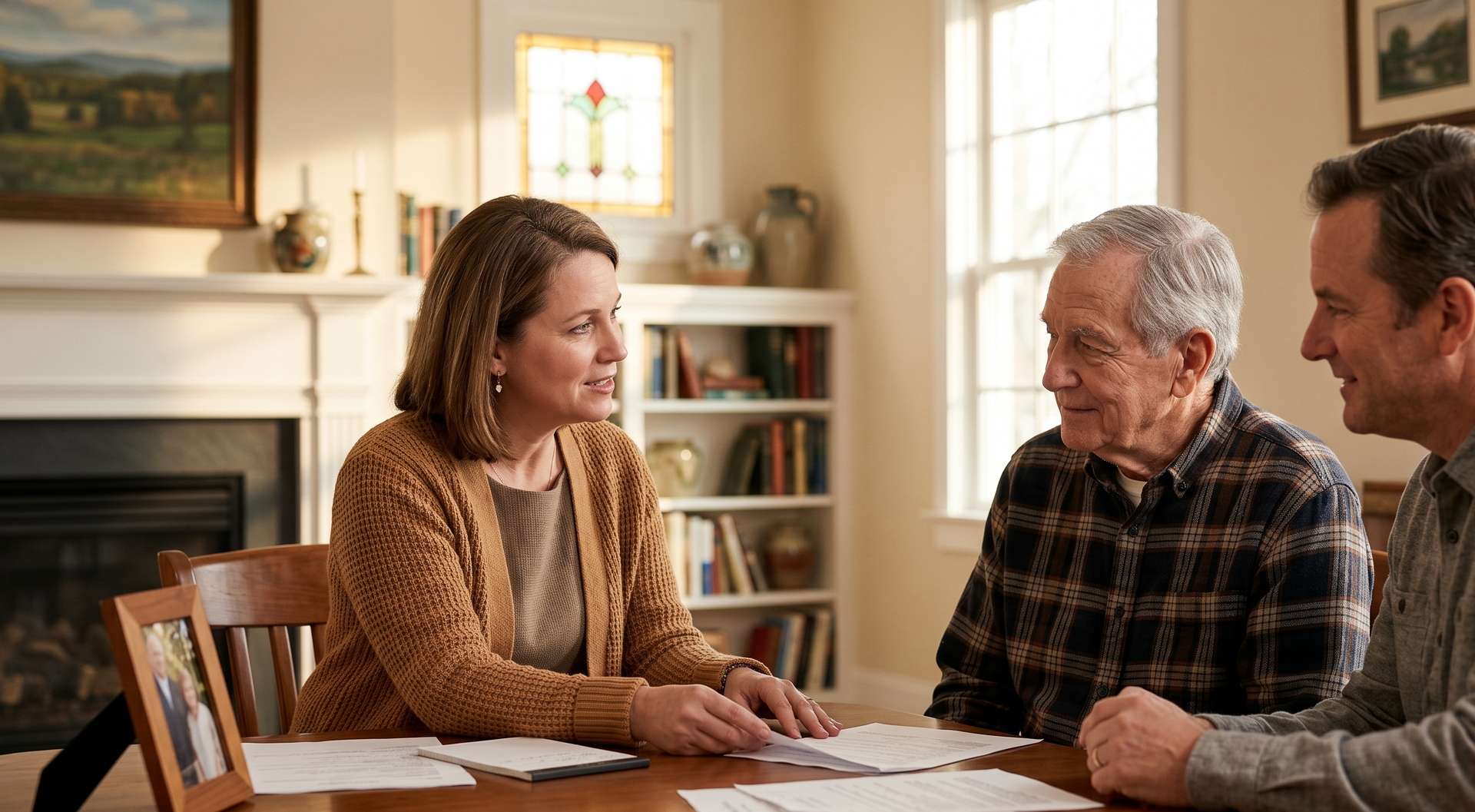
Family-owned funeral homes operate differently. The owner is usually the person greeting you at the door, sitting with you during the arrangement meeting, and directing the service itself. There are no regional managers, no corporate marketing budgets, and no shareholder expectations inflating the price of what should be a personal, community-centered service.
This is why it's always a good idea to compare pricing between providers. Federal law gives you the right to request an itemized price list from any funeral home. Use that right.
The Personal Touch That Gets Lost
Funeral care is deeply personal. When your family is going through one of the hardest moments of your life, you want to feel like the people helping you actually know you. Or at the very least, that they have the freedom to adapt to what your family needs.
At a family-owned funeral home, the person making decisions has full authority to be flexible. If a family needs extra time in the arrangement room, they get it. If a service requires a creative solution, the owner can make that call on the spot. If someone needs to adjust a payment plan, there's no corporate policy standing in the way.
Corporate-owned funeral homes often have more rigid processes. Employees may follow scripts or checklists designed for consistency across hundreds of locations. That consistency has its place, but it can come at the cost of the kind of personal, one-on-one care that families remember most.
The staff at corporate locations are often wonderful people. But they may not have the same freedom to go above and beyond as someone who owns the business and lives in the community they serve.
Community Roots vs. Corporate Structure
Family-owned funeral homes tend to be deeply embedded in their communities. The owner's kids go to local schools. They sponsor Little League teams. They see their families at the grocery store. There's a level of accountability that comes from serving your neighbors, not just your customers.
The Stephens family has been part of Williamson County for generations. That kind of local history creates a relationship between a funeral home and its community that goes beyond business. It's built on trust that's been earned over decades, not purchased through an acquisition.
Corporate chains can certainly participate in local events and donate to local causes. But the connection is different when the owner lives next door versus when the parent company is headquartered in another state.
What to Ask When Choosing a Funeral Home
If you're comparing funeral homes, here are some questions worth asking:
Who owns this funeral home? A simple question, but one that many families never think to ask. If the answer involves a parent company or corporate group, that tells you something about how the business operates.
Can I speak directly with the owner or lead funeral director? At a family-owned funeral home, this is almost always possible. At a corporate location, you may be directed to a staff member who has limited decision-making authority.
Can I see your full price list? Every funeral home is required by the FTC to provide a General Price List. Compare the prices side by side, especially for basic services, caskets, and facility fees.
How long has this funeral home been under its current ownership? If the funeral home changed hands recently, it may still be in transition. Understanding the ownership timeline helps you understand the culture of the business.
Will the same person handle my case from start to finish? Continuity matters during a difficult time. Some corporate locations rotate staff across multiple funeral homes in a region, which can disrupt the personal connection families need.
Why This Choice Matters More Now
The funeral industry is at a turning point. Cremation rates are rising. Consumer expectations are changing. And more families are asking hard questions about value, transparency, and trust.
In this environment, the difference between a family-owned funeral home and a corporate one isn't just about price. It's about who is sitting across the table from you when you're making some of the most important decisions of your life.
It's about whether the person helping you has the freedom to truly serve your family, or whether they're following a playbook written by someone who has never met you.
There's no single right answer for every family. Some may prefer the consistency and brand recognition of a larger provider. But for families who value personal attention, honest pricing, and deep community roots, an independent, family-owned funeral home often provides something that can't be replicated at scale.
Making the Choice That Feels Right
Choosing a funeral home is not like choosing any other service. The stakes are deeply personal, and the decision stays with your family long after the service is over.
Take your time. Ask questions. Look at the full range of services available and compare them honestly. And trust your instincts about where you feel most comfortable and most cared for.
At Stephens Funeral & Cremation Services, we're proud to be family-owned and operated. Casey Stephens carries on a tradition of funeral care started by his grandfather, Clyde Stephens, and continued by his father, David Stephens. That's three generations of serving Williamson County families with honesty, compassion, and respect.
If you'd like to learn more about who we are and how we can help your family, reach out to us anytime. No pressure. Just a conversation.