Funeral Etiquette in 2026: What Has Changed and What Still Matters
Funeral etiquette used to be simple. You wore black. You sent flowers. You sat quietly. You shook hands with the family and said, "I'm sorry for your loss."
Those basics still hold. But the world around funerals has changed, and etiquette has shifted with it. Services are more personalized. Dress codes are looser. Social media has introduced entirely new questions about what's appropriate. And the rise of celebrations of life has blurred the line between somber ceremony and joyful gathering.
If you've ever stood outside a funeral home wondering whether your outfit is appropriate, or stared at your phone unsure whether to post a tribute online, or hesitated at the door because you weren't sure if you were "close enough" to attend, this guide is for you.
Here's what's changed about funeral etiquette, what hasn't, and what still matters most in 2026.
What to Wear: The Rules Have Relaxed
For generations, the expectation was clear: dark clothing, preferably black. Men in suits. Women in dresses or conservative outfits. Anything bright, casual, or attention-grabbing was considered disrespectful.
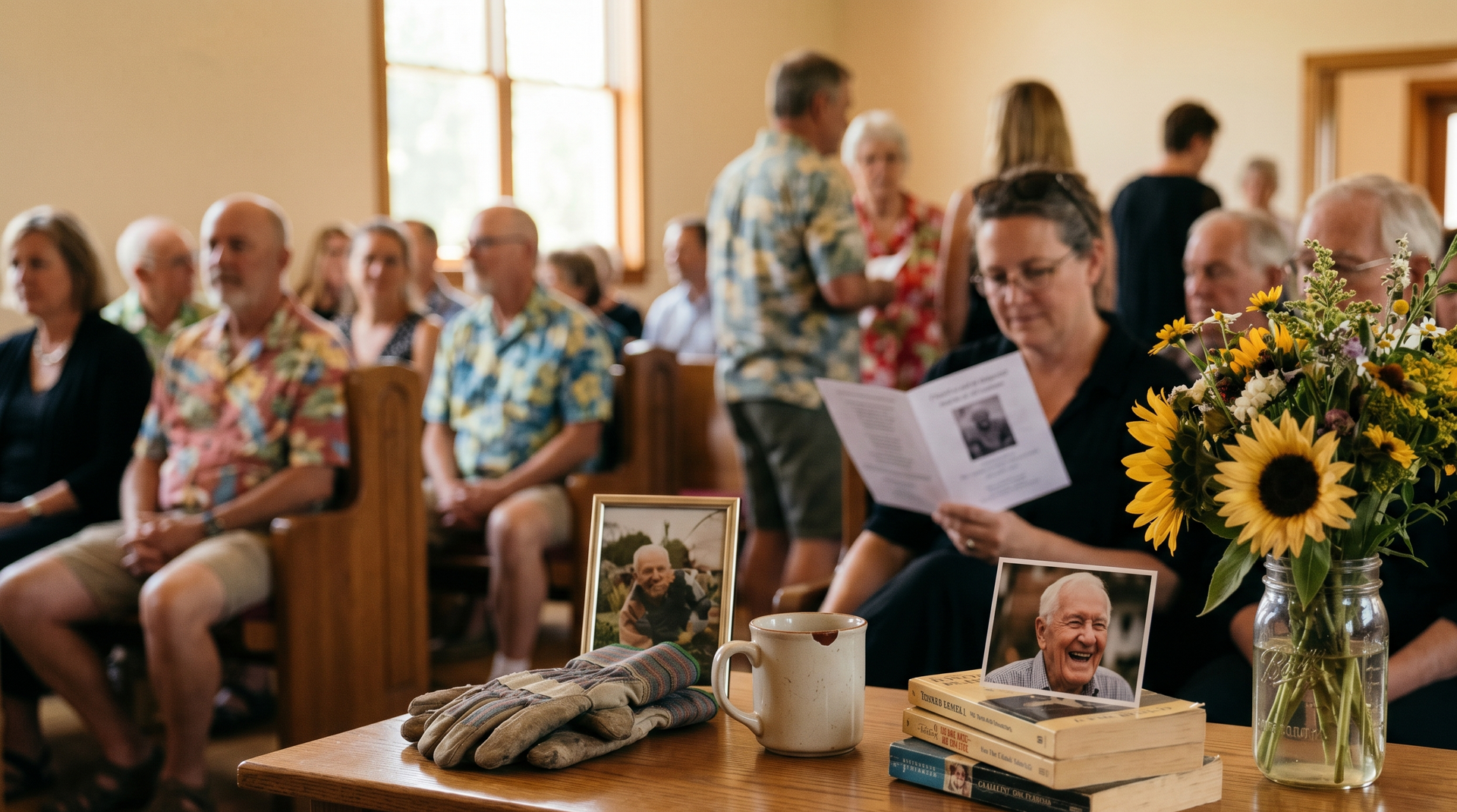
That standard has loosened considerably. Many families now specify a dress code that reflects the personality of the person being honored. You might see invitations that say "wear bright colors" or "dress casually" or "wear their favorite team's jersey." Celebrations of life in particular tend to lean away from the traditional all-black expectation.
That said, when no dress code is specified, it's still safest to lean toward the conservative side. Dark or muted colors. Clean, respectful clothing. Nothing overly casual like shorts, tank tops, or flip-flops unless the family has specifically encouraged it.
The underlying principle hasn't changed: your clothing should not draw attention to you. The focus should be on the person being honored and the family that's grieving.
When in doubt, ask. There's nothing wrong with calling the funeral home or checking with a family member about what's appropriate.
Should You Attend If You Weren't Close?
One of the most common etiquette questions people wrestle with is whether they should attend a funeral for someone they knew casually. A coworker's parent. A neighbor they waved to but never had dinner with. A friend from years ago they'd lost touch with.
The answer is almost always yes.
Funerals aren't just for the inner circle. They're community events. When someone shows up who the family didn't expect, it sends a powerful message: your loved one mattered to more people than you realized.
You don't have to stay for the entire service. You don't have to speak. You don't have to know exactly what to say. Just being there is enough. A brief appearance at the visitation, a handshake with the family, and a few honest words of sympathy carry more weight than most people realize.
If attending in person isn't possible, a handwritten card, a brief phone call, or even a thoughtful text message to the family is a meaningful alternative.
What to Say (and What Not to Say)
This is where many people freeze. They want to say something helpful, but they're terrified of saying the wrong thing. So they either avoid the family entirely or fall back on generic phrases that don't quite land.
Here's the truth: there is no perfect thing to say. Grief doesn't have a script. But there are a few guidelines that can help.
What tends to help:
"I'm so sorry. I don't know what to say, but I'm here." Honesty is always better than a polished line. Admitting that you don't have the right words is more comforting than pretending you do.
"I loved your mom. She always made me laugh." Specific, personal memories mean more than general statements. If you have a story, share it.
"I'm here for whatever you need." Simple. Direct. And it lets the grieving person decide what help looks like.
What tends to hurt, even when well-intentioned:
"They're in a better place." This may be true for some belief systems, but for a family in acute grief, it can feel dismissive of their pain.
"I know how you feel." You don't. Even if you've experienced a similar loss, every grief is different. A better version is, "I've been through something similar, and I'm here if you ever want to talk."
"At least they lived a long life." The length of a life doesn't reduce the pain of losing someone. This phrase minimizes the loss.
"Everything happens for a reason." In the moment of grief, this can feel cruel, even if it reflects a genuine belief. Save it for later, or not at all.
The safest approach is to keep it short, keep it honest, and lead with empathy rather than explanation.
Social Media and Funerals
This is the area where etiquette is evolving the fastest, and where the most confusion exists.
Posting a tribute. Sharing a memory or a photo of the deceased on social media is generally considered acceptable and even appreciated by many families. It shows that the person was loved and remembered beyond the immediate circle.
However, timing matters. If the death has just occurred and the family hasn't made a public announcement yet, don't be the one to break the news on social media. Wait until the family has shared the information themselves or until the obituary has been published.
Posting from the service. This is where opinions diverge sharply. Some families welcome photos and posts from the funeral. Others consider it intrusive and inappropriate.
The safest rule: don't take photos or post during the service itself unless the family has explicitly encouraged it. If you want to share something afterward, a simple, respectful post is fine. But avoid posting images of the casket, the body, or grieving family members without their permission.
Commenting on obituaries and memorial pages. Online obituaries and memorial pages have become important spaces for collective remembrance. Leaving a kind comment, sharing a memory, or simply writing "thinking of your family" is a welcome gesture.
Keep your comments focused on the deceased and the family. Avoid turning the comment section into a conversation about yourself, your own losses, or unrelated topics.
Tagging the family. Be cautious about tagging grieving family members in posts or photos. Some people find it comforting. Others find it overwhelming, especially in the first few days after a death. When in doubt, share without tagging and let the family engage on their own terms.
Flowers, Food, and Gifts
The tradition of sending flowers to a funeral is still very much alive. A floral arrangement sent to the funeral home or the family's residence is a classic gesture of sympathy that most families appreciate.
But there are other ways to show support that can be equally meaningful.
Food. Bringing a meal to the family's home in the days after the funeral is one of the most practical and appreciated gestures you can make. Grieving families often forget to eat, and the last thing they want to do is cook. A home-cooked meal, a gift card to a local restaurant, or a delivery from a meal service can be a lifeline.
Charitable donations. Many families now include a line in the obituary that says "in lieu of flowers, donations may be made to..." If the family has requested this, honoring that wish is the respectful choice. The charity will typically notify the family of your gift.
Cards and letters. A handwritten note is one of the most lasting gifts you can give a grieving family. Unlike flowers, which fade, and food, which is consumed, a card with a personal memory or a few heartfelt words can be read and re-read for years.
Gifts of service. Offering to mow the lawn, pick up groceries, drive the kids to school, or handle a specific errand can be more helpful than any physical gift. The key is to offer something specific rather than saying, "Let me know if you need anything." Most grieving people won't ask for help even when they desperately need it.
Attending the Visitation vs. the Service
Some people wonder whether they should attend the visitation, the funeral service, or both. The answer depends on your relationship with the deceased and the family.
If you were close to the person or the family, attending both is appropriate. The visitation is a more personal, one-on-one opportunity to express your condolences. The service is a communal event that honors the person's life.
If you were a more casual acquaintance, attending just the visitation is perfectly acceptable. It allows you to pay your respects without committing to the full service. Many people stop by the visitation for 15 to 30 minutes, sign the guest book, speak briefly with the family, and leave.
If you can only attend one, choose whichever feels more comfortable. There's no wrong choice. You can learn more about what to expect at a service on our funeral etiquette page.
Etiquette for Non-Traditional Services
As more families choose celebrations of life, outdoor memorials, and informal gatherings, the etiquette expectations shift accordingly.
At a celebration of life, the atmosphere is usually lighter. Laughter is welcome. Stories are encouraged. The dress code may be casual. Food and drinks might be served. The event may feel more like a gathering of friends than a solemn ceremony.
Even so, the core principles remain: respect the family's wishes, follow their lead on tone and behavior, and remember that behind the celebration, there is still real grief.
If you're unsure about the format, the funeral home can often provide guidance. At Stephens Funeral & Cremation Services, we help families design services that feel right for them, and we're happy to advise guests on what to expect.
Children at Funerals
Another common etiquette question is whether children should attend funerals. The short answer is yes, with appropriate preparation.
Children benefit from being included in family rituals, including funerals. Excluding them can create confusion and anxiety. Including them, with honest explanations and clear expectations, helps them process loss in a healthy way.
Before the service, explain what they'll see and hear. Let them know it's okay to feel sad, and it's okay to cry. Give them a role if possible, even something small like placing a flower or holding a candle.
If a child becomes restless during the service, it's fine to step out quietly. No one will judge a parent for caring for their child's needs.
For more on how to help children through the grief process, our children and grief resource offers additional guidance.
The One Rule That Never Changes
Funeral etiquette has evolved in many ways. Dress codes have relaxed. Social media has introduced new questions. Celebrations of life have rewritten the format. But one rule has never changed and never will:
Show up.
That's it. Show up for the people who are hurting. Be present. Be kind. And don't overthink it.
You don't need the perfect outfit. You don't need the perfect words. You don't need to stay for hours. You just need to be there, in whatever way you can, so that the family knows they're not going through this alone.
If you have questions about what to expect at a funeral or memorial service, or if you need help planning one, contact us anytime. We're here to help families and their communities navigate these moments with grace, dignity, and care.